
The Supreme Court of India will commence hearings on two significant constitutional matters: the interpretation of legislative privileges of MLAs concerning freedom of speech and expression, and the power of state legislatures to impose additional sales tax levies. Both issues will be heard by seven-judge Constitution benches, with one case stemming from a 2003 plea by journalist N Ravi regarding breach of privilege.

The Supreme Court has declined to issue orders prohibiting a protest march called by the Cockroach Janata Party (CJP) for September 5. The court stated its expectation that all parties would act peacefully and lawfully, directing the petitioner to a High Powered Enquiry Committee. The CJP's march aims to protest the Centre's alleged failure to honour promises made regarding examination irregularities and police violence during previous agitations.

The Supreme Court was informed that sanction is awaited to prosecute Madhya Pradesh minister Kunwar Vijay Shah for his remarks against Army officer Col Sofiya Qureshi. The SIT probe is complete, and a chargesheet will be filed once sanction is obtained. Shah had previously apologised for his controversial comments.

Asking the parties to participate in the mediation proceedings with an open mind, the apex court said they may not make any statements in the public and may not go on social media about the dispute.

The Supreme Court has quashed criminal proceedings against the in-laws of a woman who alleged dowry-related harassment, citing a lack of specific evidence linking them to the alleged crimes.

The Supreme Court has issued a limited notice to the Centre, seeking clarification on whether courts can grant fair compensation under the SHANTI Act in nuclear accidents, despite liability caps. The court also questioned potential conflicts of interest in appointing members to the Atomic Energy Regulatory Body under the Act, following a plea challenging the law's constitutionality.

Congress-ruled states, including Karnataka, Kerala, and Telangana, are preparing to challenge the Mines and Minerals (Development and Regulation) Amendment Act, 2026, in the Supreme Court. They allege the new law undermines states' rights by restricting their powers to levy taxes on mineral resources, a claim the Centre denies, stating it aims for uniform mineral rates.

The Cockroach Janta Party (CJP) on Tuesday accused the Centre of resisting the Supreme Court's bid to facilitate quashing of FIRs against students and protesters and demanded that the outfit's members be included in the high-powered committee announced by the court to examine allegations of police excesses and violence against cops.

The Supreme Court has directed its High-Powered Enquiry Committee to prioritise and immediately submit an interim report on complaints of sexual assault faced by women protesters during the July 20 NEET agitation at Jantar Mantar.

The Supreme Court has decided to form a high-powered committee, including retired judges and former top police officials, to investigate allegations of police excesses against student protesters in Delhi. The committee will examine video evidence and complaints, particularly from female protesters, and the court may quash FIRs against students without grave criminal antecedents, upholding the right to peaceful protest.

The Supreme Court is set to hear a petition seeking mandatory and uniform labelling of ethanol percentage at petrol pumps and a public database on vehicle compatibility with ethanol-blended fuel. The plea also calls for an expert committee to assess the impact of E20 fuel on vehicles, environment, and food security, and a consumer disclosure protocol.

There has never been a woman Chief Justice of India, although Justice B V Nagarathna is expected to become the first -- in 2027 if the convention of seniority is followed.
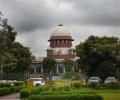
The Supreme Court has listed for hearing on August 31 an appeal of Sumit Roy, personal assistant to Trinamool Congress MP Abhishek Banerjee, challenging the August 6 order of the Calcutta high court denying him pre-arrest bail in the Salboni land-grabbing case.

The Supreme Court has strongly criticised the West Bengal government's handling of an incident in Malda district where judicial officers were allegedly attacked. The BJP has accused the TMC of orchestrating the event to obstruct the Special Intensive Revision (SIR) of electoral rolls and protect Rohingyas.

The Lok Sabha Secretariat has issued notices to 20 rebel Trinamool Congress (TMC) MPs, seeking their replies within seven days regarding petitions filed by TMC leader Abhishek Banerjee for their disqualification under the anti-defection law.

The Supreme Court has stayed a Madras High Court order that had quashed the Tamil Nadu government's decision to provide government jobs to relatives of those who died in a stampede at Karur last year, questioning the locus standi of petitioners challenging government policy.

The Delhi High Court has ruled that live-in relationships between consenting adults are akin to marriage, granting police protection to a couple facing threats. The court emphasised that fundamental rights to choose a partner cannot be curtailed by societal prejudices, reinforcing the legal sanctity of such relationships.

Olympian Vinesh Phogat has moved the Delhi High Court challenging two show-cause notices issued by the Wrestling Federation of India (WFI) and subsequent disciplinary proceedings.

The Supreme Court has established a five-member high-powered committee, led by former top court judge Justice R Subhash Reddy, to investigate allegations of police excesses against student protesters and violence against police personnel during recent demonstrations in Delhi.

A coalition of 25 Democratic-ruled US states has filed a lawsuit against the Trump administration's decision to impose new tariffs on 60 economies, including India. The states contend that these tariffs, ostensibly aimed at combating forced labour, are illegal taxes that will raise costs for consumers and businesses, and were implemented without proper legal justification.
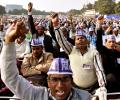
The Centre has informed the Supreme Court that the 'creamy layer' principle, which excludes affluent individuals from reservation benefits, does not apply to Scheduled Castes (SCs) and Scheduled Tribes (STs). This stance opposes Public Interest Litigations (PILs) seeking to implement such a principle for SC/ST reservations and to direct the government to formulate policies for more equitable distribution of reservation benefits.
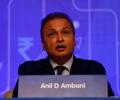
The Supreme Court has deferred the hearing on a PIL alleging large-scale banking fraud involving the Anil Dhirubhai Ambani Group and its firms to May 8.

The Supreme Court has issued a directive for the Shri Banke Bihari Temple in Vrindavan, mandating that all donations must be deposited into official donation boxes or the online temple treasury. This comes amidst serious allegations of sevayats siphoning off funds and obstructing online donation methods, highlighting the need for a transparent mechanism in temple management.
The Supreme Court will consider the Centre's plea for clarification on the applicability of its March 11 judgement regarding OBC creamy-layer criteria for the Civil Services Examination (CSE) 2025. The government highlights practical difficulties and potential unequal treatment of candidates if the ruling is applied retrospectively, as the CSE 2025 selection process concluded before the verdict. The Department of Personnel and Training (DoPT) seeks to proceed with service allocation based on the pre-March 11 criteria to avoid disruption to training schedules and ensure fairness for candidates.
The Supreme Court has directed the Uttar Pradesh DGP to form an all-women SIT to investigate the rape and murder of a four-year-old girl in Ghaziabad, following concerns about the local police's handling of the case and allegations of denial of treatment by private hospitals.
The Supreme Court has sought responses from the Centre and state governments on a Public Interest Litigation (PIL) advocating for the confiscation of movable and immovable property belonging to individuals and their family members involved in exam question paper leak cases. The plea also calls for invoking various anti-corruption and financial crime acts against perpetrators and suggests consecutive sentencing for such offences.

The Supreme Court has quashed all FIRs against students who participated in the Cockroach Janta Party-led protests, stating the cases should not affect their future, while the government affirmed its commitment to youth welfare.
Observing that right to speedy trial is also a "valuable right" of a victim, the Supreme Court on Monday set aside an order of the Allahabad high court which had kept in abeyance the trial in a murder case.

The Enforcement Directorate has accused West Bengal Chief Minister Mamata Banerjee of obstructing its investigation into a Rs 2,700-crore coal smuggling case, alleging she used state machinery to halt a search of an I-PAC office in Kolkata.

The Kerala High Court has dismissed a petition seeking to quash criminal proceedings against a man accused of repeatedly raping a 17-year-old girl. The court ruled that even if a marriage was solemnised under Muslim religious rites, it would not protect the accused from criminal liability under the POCSO Act, reinforcing that the Act applies when one party is a minor, irrespective of personal law.

Former Ram Janmabhoomi Teerth Kshetra Trust general secretary Champat Rai and ex-trustee Anil Mishra, who had stepped down amid a temple donation theft controversy, are now actively holding meetings and interacting with seers in Ayodhya. This re-emergence coincides with the Special Investigation Team (SIT) sharing its final report on alleged irregularities in Ram temple donations with the Trust, sparking speculation about its findings.

The Allahabad High Court has strongly criticised the state machinery for its "persistent failure" and significant delays in processing a minor rape survivor's plea for medical termination of pregnancy. The court highlighted how seven weeks were lost due to bureaucratic hurdles, leading to the survivor delivering the child despite seeking an abortion. The court also directed authorities to conduct a comprehensive socio-psychological study on rape cases and their consequences.

US President Donald Trump has signed two executive orders aimed at cracking down on 'birth tourism' and limiting eligibility for birthright citizenship, weeks after the Supreme Court rejected a similar directive.

The Supreme Court has requested a response from the Manipur State Legal Authority regarding the appointment of legal aid counsel for two women allegedly paraded naked during the 2023 ethnic clashes in Manipur. This follows a plea from the CBI against the Gauhati High Court's decision to grant bail to two accused in the case.
The Supreme Court, hearing pleas on the Shiv Sena split, observed that a political party retains control over its legislature wing and its valid decisions must prevail, but also advocated for granting 'elbow room' to elected representatives for political decisions if a majority 'genuinely disagree' with party directions.

The Centre is reportedly considering moving forward with the impeachment process against Justice Yashwant Varma in the upcoming Winter session of Parliament, despite his resignation. A Lok Sabha Speaker-constituted panel has found him guilty of possessing unaccounted cash and disturbing evidence.

The Supreme Court has agreed to dissolve the marriage of former Jammu and Kashmir Chief Minister Omar Abdullah and his estranged wife Payal Abdullah. The decision came after both parties submitted an application under Article 142 of the Constitution, indicating a settlement and mutual agreement to end their marriage, overturning previous lower court rulings that had denied the divorce.

Maratha reservation activist Manoj Jarange has agreed to take water and saline treatment but vowed to continue his indefinite fast until all demands for Maratha reservation and Kunbi certificates are met. His health is deteriorating, prompting concerns from doctors and appeals from authorities. Jarange criticised the state government and mediating ministers, alleging political infighting and a lack of serious engagement on the issue.

The Uddhav Thackeray faction has told the Supreme Court that the Election Commission's decision to recognise the Eknath Shinde-led unit as the "real Shiv Sena" and grant it the 'bow-and-arrow' symbol was unlawful. Senior advocate Kapil Sibal argued that a split in a legislature party cannot, by itself, amount to a split in the political party, challenging the very basis of the poll panel's jurisdiction and its disregard for the party's 2018 constitution.
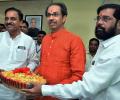
The Supreme Court is deliberating whether a split in the Shiv Sena could originate in the legislature party and then extend to the broader organisation and primary membership, as it hears pleas from the Uddhav Thackeray faction challenging the Election Commission's recognition of the Eknath Shinde-led faction.
